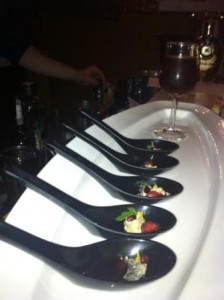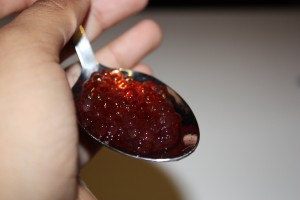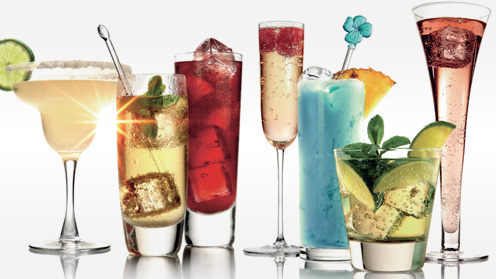

Displaying something exotic on the bar opens up your guests' eyes to all of the possibilities, and allows you to show off what your capable of working with!
The kitchen and the bar have always had a peaceful coexistence and freshness has always been a key ingredient to the success of any kitchen. The same is quickly becoming true as consumers are demanding the same fresh, handcrafted care from their mixologist as they do from their chefs. It’s rare to find a bar chef who can take the principles of traditional mixology, and synergize them with fresh ingredients to create cocktails that take your dining and drinking experience to a new level.
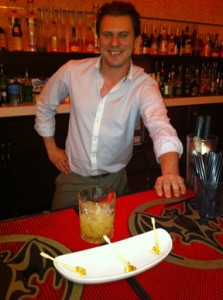
Bar chef Rob Montgomery of Toronto’s Vertical Restaurant imports fresh ingredients from all over the world to give his guests an unparalleled cocktail experience. He agrees that when creating cocktails, it was all about balance. With deep roots in the kitchen, many of the principles of Rob’s cocktails come from culinary applications, but a real passion for service and synergy is what sets him apart. “I like to use fresh and seasonal ingredients when I’m creating a cocktail for my guests, our kitchen prepares seasonal dishes, and our bar program is no different,” he says. “Often, having fresh dragon fruit, key limes, lychees, loquat, or rambutans in plain view sparks a conversation and inspires a you to try something you other wise might not have.” “Keep it simple, do it right, all it takes is a little effort on our part and the results are phenomenal,” says Montgomery. Product knowledge is fundamental to any great bar chef. Knowing the principles of cocktail synergy can help turn an average bartender into a great mixologist. Each element in the illustration below plays a part in the drink’s taste, and ultimately guest satisfaction. With this philosophy in mind you can easily start pairing cocktails with the food on the menu, much like the way we’ve traditionally matched wine and beer with food.
Pairing wine with food is not a new principle, but according to Niagara wine consultant James Gaade, the traditional rules of thumb i.e. pairing red wines with red meats and white wine with chicken or fish have been replaced with the concept that the weight of the wine is paired with the weight of the food. “Light reds like a Gamay are great with swordfish, and a full bodied Chardonnay can really complement a lighter meat dish like a beef stir fry.” The idea is that your food doesn’t overpower your wine or vice versa. Montgomery agrees and adds that using the principles of synergy you can use a sweeter white wine like a Reisling or Gewurztraminer to smooth the flavours of spicy ethnic foods, or a spicier red like a peppery Shiraz to kick the spice up a notch. It just depends whether you’re trying to complement or contrast your dish.
Kevin Healy of the Labatt Institute has some thoughts on pairing beer with food too! It’s not just about drinking Ocktoberfest beer with a fine link of German Bratwurst. Most lagers are lighter bodied beers and will complement a lighter meal such as mild flavoured seafood or game. Ales, on the other hand, are more full bodied and will complement heavier dishes like steak or ribs.
Given that cocktails often have higher margins than beer or wine, having cocktail suggestions for menu items is not such a crazy notion after all. As a mixologist, you want to use the drink to enhance the food experience, keep in mind the following rules when pairing.
Light bodied beers, like lagers, light bodied wines, and sweet and light cocktails will complement light dishes.
Heavier Ales, Spicy, full bodied wines like a Shiraz or Cabernet Sauvignon, or cocktails like a Manhattan, Caipirinha or Caesar will pair well with heavier meat or pork dishes.
Being trained on the products you are serving is paramount to the success of any bar program. Culinary schools spend years teaching their students how to create custom dishes, however, few establishments demand the same level of commitment and bartender training from their mixologists. I encourage experimentation (always in moderation) with the products on the bar. There are so many great products out there, and so many guests waiting to be inspired. Until next month, keep Raising the Bar, because if you don’t, someone else will!


Irregular Service Ethics.
Yes, PLEASE.
Remember every time Norm walked into the bar on Cheers, the entire bar would call out in unison “NORM!” It didn’t matter who was behind the bar, they knew what he drank, and it was ready and waiting for him as he assumed his position at the end of the bar. Norm embodied the “regular,” the men and women who frequent your establishment regularly. They are the ones who more often than not, tip well, and don’t ask for any special kind of service. In many cases they are the types who spend thousands a year in your establishment. They are the cornerstones of your business, you certainly can’t afford to lose them, so the question clearly is how do you keep them and how do you get more of them?
I’ve seen lower volume establishments where regulars are praised and glorified, and high volume bars also where they are overlooked with the attitude that “it doesn’t really matter what kind of service they receive, they’ll come back anyway.” In an industry where service and proper bartender training is paramount to the success of your business and your frontline service, staff are often on a career stopover on the way to something better. Operators need to actively empower their staff to make sure that they you are cultivating long-term relationships with as many clients as possible, and creating experiences that they’ll remember, and come back for.
Rob Montgomery, Bar Chef and Manager of Toronto’s Vertical Restaurant insists that details are the key. “I have operational systems covered so my staff can focus on guest experience details. Our philosophy is that we treat customers like they were a guest in our own home, I empower my staff with the same ethos and give them the tools to accomplish it.”
A good rule of thumb is that management should always be where the money is. If the restaurant is operating, management needs to be making regular rounds checking on guest experiences, not just server problems. Quite often guests will deal with sub-standard service by leaving little or no tip, and leave feeling dissatisfied. Management can circumvent this experience with a quick chat with each table. Guests are quite often more apt to give negative feedback to someone who is empowered to change the situation. “Mistakes and mishaps are inevitable in any restaurant; if they are handled correctly the guest will take notice. Fixing mistakes promptly and properly can impact guests greatly. Some of our longest running guests started off on the wrong foot, problems were solved and the guests were impressed enough to return again and again,” says Montgomery.
Everyone wants to feel special. Cristina Maria Morelli service ambassador of the Irish Embassy says that many servers overlook the simple things like a smile and a genuine interest in a guest’s well being. Anticipating the needs of her clientele is the surest way to make people feel special. “Having a drink or menu ready for them before they have to ask shows them that I’ve got their needs in mind. I try to treat everyone who walks through the door like they were the owner’s best friend!” People respond to that kind of service, and with this philosophy every guest is a potential regular. “My regulars have afforded me a lifestyle that others only dream of,” says Morielli.
It is important that the servers are focussed on providing service tailored to the guest’s needs. Obviously a birthday party and a solo businessperson require different styles of service. Montgomery echoes Morelli’s sentiments, “We see our regular guests in many situations. A business lunch one day, then out with friends for drinks the next day. It is important to handle their needs appropriately in each situation, and regardless, we never take regulars for granted. We ALWAYS make time to say hello and check the quality of their experience.”
I recently ate at La table du Chef in Sherbrooke, QC. The meal was terrific, but to complete the experience, chef Alain Labrie visited our table at the end of the meal for a 30 second chat and quality check. The added touch of a personal visit from the chef went above and beyond my expectations, and made our whole table feel special. It may not always be possible to chat and check with every table in your establishment, so creating an atmosphere where your service staff feel comfortable approaching management to resolve guest issues in a timely manner is crucial to your ability to turn any negative experiences into positive ones. The bottom line is that when the service (with appropriate bartender training) and food are good, I’ll probably come back for seconds, maybe even become your regular. If things go wrong and the problem isn’t addressed, you’ll never see me again. If there’s a problem and you address it you guarantee that I’ll come back with my friends. Maybe they can be your regulars too.
Until next time keep Raising the Bar in your business, because if you don’t someone else will!